About
The full arc
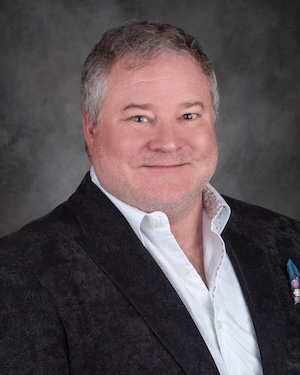
Three chapters, each one deepening something different. Twenty-six years building at scale, five years owning every part of a business, and a year getting current on AI. I'm doing the combination at community scale now, teaching this to a room of business owners every other week. What I haven't done is all three inside one company. That's what I'm looking for.
AI is changing what a business can actually do, and the people deciding what to build with it usually understand the technology or the P&L. I designed the session architecture that proved a flagship metric was lying to Windows leadership, and I made payroll out of my own account for five years. I'd rather point those at one problem than keep alternating between them.
Microsoft: twenty-six years (1994–2020)
Xbox. HoloLens. Windows Hello. Twenty-six years building and shipping at enterprise scale taught me real technical depth and the delivery leadership to move complex work across many teams, and the two never came apart. When a flagship biometric feature reported 99% success while customers were visibly unhappy, I was the one who decided the metric was lying. I designed the session architecture that proved it and stayed hands-on through the design, my architect took the implementation, and my engineers built it. The harder half wasn't the pipeline. It was getting three orgs that didn't report to me to instrument against one shared session.
Ownership: the crucible (2021–2026)
I bought a service business, built it past $1M ARR, and ran it alone: P&L, strategy, hiring, payroll, every call mine. Ownership did what two decades of shipping never quite managed. At Microsoft I could ship something good and go home. When it was my payroll, something good that nobody renewed was just something good. And when the business had to be wound down, I learned what leadership looks like under contraction. It means protecting employees, customers, and obligations with no one else to hand the hard parts to.
AI: the way back in (2025–present)
Running that business meant drifting from hands-on technology, so the return was deliberate. I built with it daily until it became how I operate. The systems in Selected Work are deployed and running, not demos. An agent fleet reads two live mailboxes, a classifier weans itself off the model as my own corrections accumulate, and a governance ladder that reports no agent has earned autonomy yet, because none has. The scale is one operator. What I think transfers is the method, and the record of it is public.
I also teach it. Every other week I run two sessions for the MorningCoach community, business owners and entrepreneurs whose current ceiling with AI is a chat window, and the most engaged group gets a longer version with a deep dive on agentic builds to follow. Explaining an agentic build to somebody who doesn't write code is a different skill from building one, and it's the closest thing I currently do to the work I'm looking for.
What I like, across all three chapters, is systems problems. Taking something tangled and breaking it down until it's a list of things somebody can do on a Tuesday. Rebuilding the technical side this year with AI as the partner has been the most fun I've had working in a long time.
What I'm after
My first instinct was to look for roles that mirrored what I'd done last, which was the shortest way back in rather than the right one. What stopped me was getting specific enough to see the real problem underneath. My approach was dated, and so were my skills, after five years away from the industry running someone else's daily operations instead of shipping technology.
What I want now is the opposite of the layup. I was never an individual contributor at Microsoft. I ran orgs, and there were engineers and an architect behind the work. But the part I was best at was the part where I had no authority at all, getting three teams that didn't report to me to instrument against one definition none of them had asked for. A senior IC seat is where that work lives without the org attached. Whether I can still do it without a team behind me is the fair question, and I'd rather be asked it than talk around it.
Closing that gap by studying for the sake of studying would have missed the point, so I built. I expanded the same systems already running my own life into working software, the operating system in How I Work. I still run my search through it today.
The search is still open. If the fit is real, I want the conversation.
Contact
Seattle area, and open to relocation.